
Overview of LLM Hardware Requirements in 2026
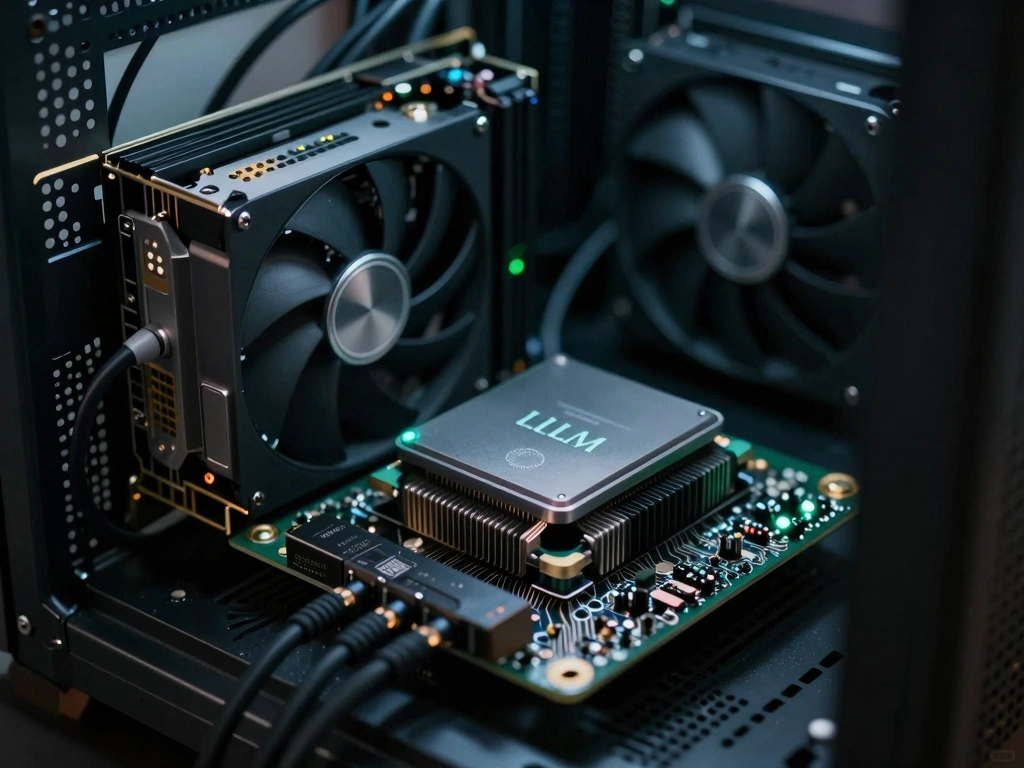
As we approach 2026, the demand for local deployment of Large Language Models (LLMs) is set to rise dramatically. Businesses and developers are increasingly recognizing the benefits of running LLMs on local hardware, including enhanced data privacy, reduced latency, and the ability to customize models for specific tasks. Understanding the hardware requirements for such deployments is crucial for anyone looking to invest in this technology.
Current Trends in Local LLM Deployment
In recent years, there has been a marked shift toward local LLM deployment due to increasing concerns about data privacy and security. Companies like OpenAI and Anthropic have released smaller versions of their models that can run on local machines, making them more accessible. For instance, models such as GPT-3.5 Turbo have been optimized for local environments, allowing businesses to utilize these powerful tools without relying on cloud infrastructure.
Additionally, industries such as healthcare and finance are leading the charge in local LLM adoption. For example, healthcare providers are using local LLMs for patient data analysis while ensuring compliance with HIPAA regulations. This trend is expected to continue, leading to a greater demand for robust and efficient local hardware solutions.
Projected Advancements in Hardware Technology
Looking ahead to 2026, we can expect significant advancements in hardware technology tailored for LLM applications. Innovations in processors, graphics units, and specialized AI chips will facilitate faster computations and allow for more complex model architectures. Companies like NVIDIA and AMD are already working on next-generation GPUs optimized for AI tasks, which will be crucial for supporting local LLMs.
Moreover, developments in quantum computing and neuromorphic chips may also play a role in revolutionizing the processing capabilities necessary for running sophisticated LLMs locally. These advancements will not only enhance performance but will also lower the barrier to entry for smaller organizations to leverage powerful AI technologies.
Importance of Local Processing Capabilities
The importance of local processing capabilities cannot be overstated. With advancements in LLMs, more organizations are recognizing that maintaining proprietary data locally can provide a competitive edge. Local processing allows for quicker iterations and testing of models, enabling companies to implement changes more rapidly than if they were reliant on cloud-based systems.
Additionally, the reduced risk of data breaches and compliance with regulations such as GDPR make local LLM deployment an attractive option. Companies can build tailored solutions that meet specific business needs without exposing sensitive data to external servers.
Processor Specifications for Local LLMs
Expected CPU and GPU Innovations
In 2026, we anticipate that CPUs and GPUs will reach new heights in terms of performance. The introduction of processors such as AMD's EPYC series and Intel's upcoming Sapphire Rapids architecture will provide multi-core processing capabilities that are essential for running large models. These processors are expected to feature technologies like DDR5 memory support and enhanced cache hierarchies, which will further improve performance.
On the GPU front, NVIDIA's next-generation architectures, such as Ada Lovelace or even the anticipated successor, will likely incorporate more CUDA cores and tensor cores that are optimized for AI applications. Products like the NVIDIA A100, which is already used for training large models, will see successors that can handle even more extensive datasets with increased efficiency.
Comparing Performance Metrics for LLMs
Performance metrics for processors running LLMs can be gauged through various benchmarks, such as FLOPS (floating-point operations per second), memory bandwidth, and latency. For instance, a high-end GPU like the NVIDIA A100 achieves around 312 teraFLOPS for deep learning tasks, while CPUs are generally lower in this metric but excel in multi-threaded tasks.
In 2026, we can expect processors that not only improve these benchmarks but also introduce specialized instructions optimized for machine learning workloads. This will lead to enhanced performance in model inference and training processes, enabling real-time applications.
Energy Efficiency Considerations
Energy efficiency will be a crucial factor in local LLM hardware specifications by 2026. With the increasing focus on sustainability, processors that are energy-efficient while delivering high performance will be in demand. Companies like ARM are developing energy-efficient processors that can handle AI workloads without excessive power consumption.
Additionally, techniques such as dynamic voltage and frequency scaling (DVFS) will likely become more widespread, allowing systems to adjust their power usage based on workload demands. This will not only reduce operational costs but also extend the lifespan of hardware components.
Memory and Storage Needs for LLMs
RAM Requirements for Efficient Operation
As LLMs become more complex, the requirements for RAM will increase correspondingly. In 2026, it is projected that systems running advanced LLMs will require a minimum of 64 GB of RAM for efficient operation. For larger models, configurations with 128 GB or even 256 GB of RAM may become standard.
Moreover, the use of DDR5 memory technology will likely be prevalent, offering higher bandwidth and lower latency compared to previous generations. This will be essential for ensuring that data can be accessed quickly during model training and inference.
Storage Solutions: SSD vs. HDD
The choice between SSD and HDD storage solutions will heavily influence the performance of local LLM deployments. In 2026, SSDs will be the preferred choice due to their significantly faster read and write speeds compared to traditional hard drives. NVMe SSDs will likely dominate the market, offering speeds that can exceed 7 GB/s, which is crucial for handling large datasets efficiently.
For organizations that need to store vast amounts of data, hybrid storage solutions that combine SSDs for high-speed access and HDDs for archival purposes may become common. This approach allows businesses to balance performance with cost-effectiveness.
Data Management Strategies for Large Datasets
As local LLMs require access to large datasets, effective data management strategies will be essential. Techniques such as data sharding and partitioning will help in distributing data across multiple storage devices, thereby improving access speeds and processing times. Moreover, organizations may adopt data compression algorithms to minimize storage needs without sacrificing data integrity.
In addition, employing advanced database management systems that support real-time analytics will be critical for efficiently managing the data lifecycle, from ingestion to processing and archiving.
Networking and Connectivity Considerations
Local vs. Cloud-Based Networking Implications
The choice between local and cloud-based networking has significant implications for LLM performance. While cloud solutions offer scalability, local deployments can provide faster data access and reduced latency. In 2026, businesses will need to weigh the benefits of local processing against the flexibility of cloud resources.
Local networks will need to be robust enough to handle the data flow required for LLM operation. Advanced networking technologies such as 5G and Wi-Fi 6E will play critical roles in ensuring high-speed connectivity for local deployments.
Bandwidth Requirements for LLM Functionality
Bandwidth will be a crucial factor in ensuring smooth LLM operation. By 2026, organizations will need to ensure that their local networks can support high data throughput. For example, running inference on an LLM might require bandwidth in the range of 1-10 Gbps, especially if multiple users are accessing the model simultaneously.
As such, organizations may need to invest in high-capacity routers and switches to handle these demands effectively. Additionally, implementing Quality of Service (QoS) protocols will help prioritize LLM-related traffic over other network activities.
Impact of Latency on LLM Performance
Latency is a critical factor in the performance of local LLMs. Low latency will be essential for real-time applications, such as customer support chatbots or interactive AI tools. By 2026, organizations will need to optimize their hardware and network configurations to minimize latency, which could be as low as 1 millisecond in ideal conditions.
Factors affecting latency include network congestion, hardware speed, and data processing efficiency. Organizations should regularly monitor and optimize these elements to ensure that LLMs perform effectively in real-world applications.
Future-Proofing Local LLM Hardware Investments
Scalability of Hardware Solutions
One of the key considerations for organizations investing in local LLM hardware is scalability. By 2026, companies will need to ensure that their hardware choices can scale to meet increasing demands. This may involve selecting modular components that can be upgraded independently, such as GPUs and RAM, rather than committing to entire systems that may become obsolete quickly.
Moreover, leveraging cloud-bursting techniques, where workloads can seamlessly transition to the cloud during peak demand, can provide additional scalability while maintaining the benefits of local processing.
Backward Compatibility with Existing Systems
Backward compatibility will also be an essential factor for local LLM hardware. Organizations that have invested in specific architectures or platforms will want to ensure that their new hardware can integrate seamlessly with existing systems. This might involve choosing processors that support older APIs or software frameworks to minimize disruptions during upgrades.
For example, NVIDIA's GPU lineup has historically maintained compatibility with older CUDA versions, making it easier for organizations to transition without requiring extensive re-engineering of their applications.
Budgeting for Upgrades and Maintenance
Finally, organizations must budget for ongoing upgrades and maintenance of their local LLM hardware. As technologies evolve, hardware will need to be updated to keep pace with new models and methodologies. Companies should allocate funds not just for initial investments but also for future-proofing their infrastructure through regular assessments and strategic upgrades.
In conclusion, understanding the local LLM hardware requirements for 2026 will be crucial for organizations looking to harness the power of AI. By planning for advancements in processing capabilities, memory and storage needs, networking considerations, and future-proofing investments, businesses can ensure they are well-prepared to leverage local LLMs effectively.